


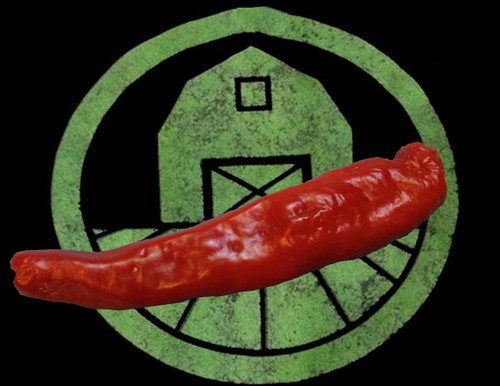
The Charleston pepper was developed in the United States through a formal breeding program. It was created in the early 1990s by USDA researchers Phil Dukes and Richard Fery at the U.S. Vegetable Laboratory in Charleston, South Carolina. The goal was to produce a pepper that combined strong heat with excellent plant vigor and resistance to root-knot nematodes, resulting in a reliable, productive variety that performs well in a wide range of growing conditions. Though sometimes compared to Cayenne types, the Charleston pepper is a distinct cultivar bred for both agricultural performance and culinary heat.
The Charleston pepper produces long, slender, tapered pods typically measuring about 3.5 to 5 inches in length and roughly three-quarters of an inch wide. The skin is smooth and slightly glossy, sometimes lightly wrinkled. One of its most attractive features is its ripening progression: fruits start out greenish-yellow, then pass through yellow and orange stages before finally maturing to a vivid, glossy red. On the plant, this creates a multicolored display, making it as ornamental as it is productive.
The flavor of the Charleston pepper is clean, direct, and classically “peppery,” without strong fruity, smoky, or sweet notes. This relatively neutral flavor profile is one of its strengths, as it allows the pepper to add heat to a dish without significantly changing the overall taste. It supports and amplifies other flavors rather than competing with them, which is why it is often favored for sauces, powders, and seasoning blends.
In terms of heat, the Charleston pepper is significantly hotter than a standard cayenne. It typically measures 70,000 to 100,000 Scoville Heat Units, placing it well above jalapeños and into the lower end of habanero territory. The heat is sharp, bright, and assertive, making it suitable for cooks who want a noticeable but still manageable level of spice.
The Charleston pepper is extremely versatile. It is commonly used in hot sauces, pepper mashes, infused vinegars and oils, salsas, and spicy relishes. It also dries exceptionally well and can be ground into a potent chili powder or crushed into flakes. Because of its straightforward flavor and strong heat, it works particularly well in soups, stews, marinades, and spice blends where heat is desired without altering the core flavor profile of the dish.


